Lodge Room, Cabin or Sherman Cabin: Ohio State Park Stays Compared
Choosing an Ohio state park stay can feel like comparing three versions of the same trip: a lodge room, a standard cabin or a Sherman Cabin. They are not interchangeable. The right fit depends on how much privacy, indoor comfort, cooking space and campground-style living your group wants. Here is how to compare them, what to verify before booking and how to avoid surprises on arrival.
The basic difference between the three stays
The simplest distinction is how much of your day happens indoors and how much independence you want from shared facilities.
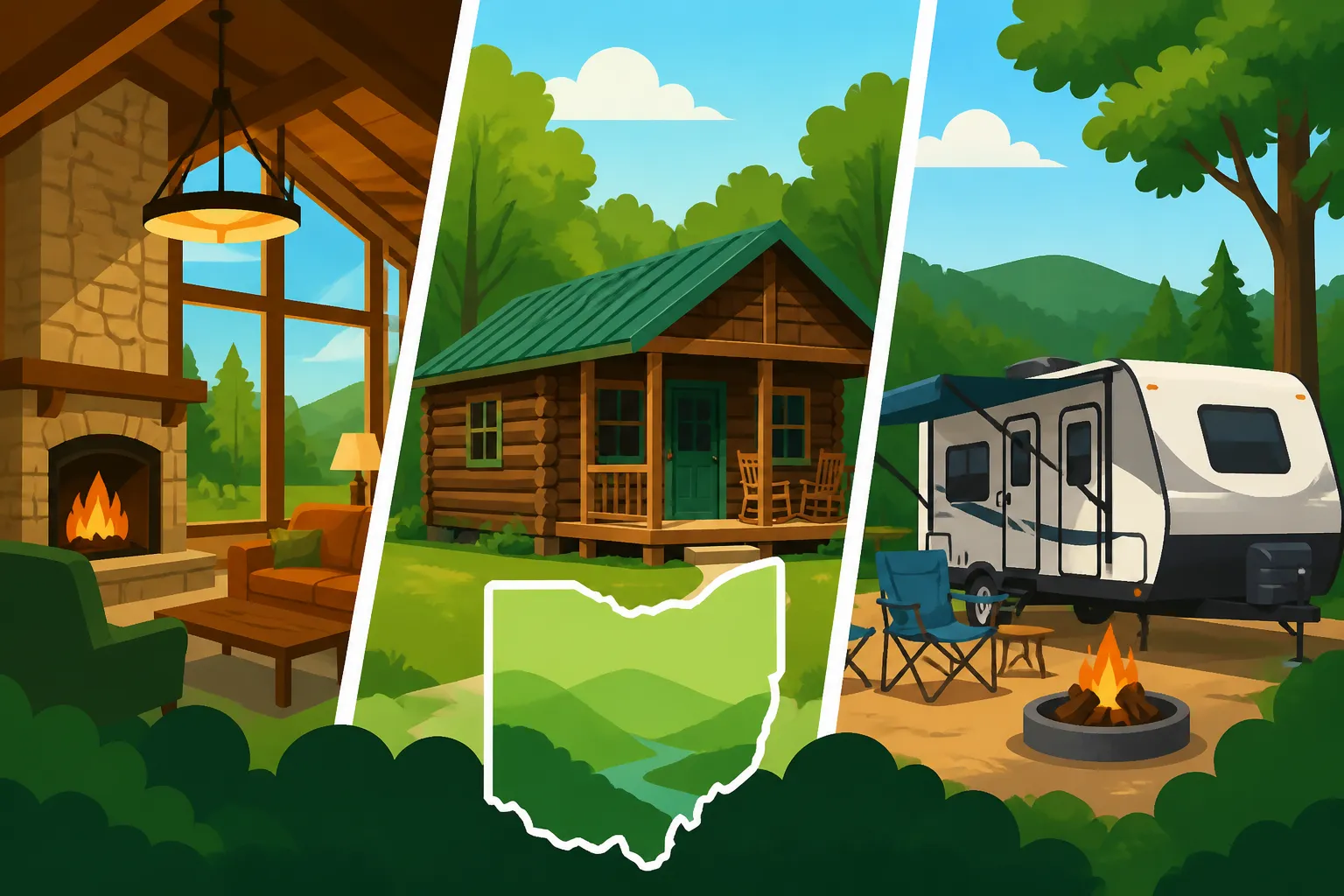
A lodge room is the most conventional indoor stay. You have a guest room in a lodge setting, with dining and recreation options associated with the property. Ohio State Park lodges offer updated guest rooms, dining rooms, and swimming pools, according to the Ohio Department of Natural Resources. That makes a lodge worth considering if your group wants a room-based trip and would rather not plan every meal around campsite cooking.
A standard cabin is usually a more self-contained place to stay. The Ohio Department of Natural Resources describes most state park cabins as having Two bedrooms, bathroom with shower, living room, and full kitchen. That layout can give a group separate sleeping areas and room to prepare meals, though “most” matters: do not assume every cabin has the same rooms, equipment or layout.
A Sherman Cabin is a rustic wood shelter rather than a small version of a full-service cabin. The Ohio Department of Natural Resources lists Sherman Cabin capacity as Sleeps 3 or 4; usually with at least one set of bunk beds. Sherman Cabins have no running water or restroom in these wood shelters; campers use the facilities in the campground, according to the Ohio Department of Natural Resources. That setup can work well for people who want a roof and beds but are comfortable using campground facilities.
The Ohio Department of Natural Resources brochure lists nine modern Ohio state park lodge and conference centers. That gives travelers lodge options across the state, but the number of lodges does not tell you what each property offers or whether it suits your trip. Check the specific lodge, cabin or Sherman Cabin listing rather than relying on the category name alone.
| Stay type | Best fit when you want | Main trade-off to plan for |
|---|---|---|
| Lodge room | A guest room and lodge amenities such as dining and a pool | The room is not a cabin with its own full kitchen and living area |
| Standard cabin | More room to spread out, a kitchen and an indoor home base | Amenities and layouts can vary by property and listing |
| Sherman Cabin | A rustic shelter with beds and a campground atmosphere | No running water or restroom inside; campground facilities are part of the stay |
Use the table as a starting point, not a guarantee of a specific room or feature. The precise amenities depend on the property and the unit being offered. If an amenity could change your plans—such as a shower, kitchen equipment, accessibility feature or pet policy—confirm it on the official listing before you reserve.
For a wider overview of Ohio lodging choices, see Primitive to Full Hookup: The Range of Ohio State Park Campsites and Choosing an Ohio State Park for Camping: Questions to Settle First. Those comparisons can help if your group is still deciding whether an indoor stay or a campsite makes more sense.
Lodge rooms: comfort with a hotel-style routine
A lodge room suits travelers who want a conventional indoor room without organizing the trip around a cabin kitchen or campground bathhouse. It can be a particularly practical choice when the group expects to spend much of the visit exploring and wants a comfortable place to return to.
The lodge setting also brings shared amenities into the decision. According to the Ohio Department of Natural Resources, Ohio State Park lodges offer updated guest rooms, dining rooms, and swimming pools. That does not mean every service is available at every lodge or during every visit. Check the specific property’s current information for what is open, what is included with a stay and whether guests have access to particular facilities.
When a lodge room makes sense
A lodge room may be a strong match when:
- Your group wants indoor accommodation without the chores of setting up a campsite.
- You expect to eat at a dining room or nearby rather than prepare every meal in the room.
- A pool or lodge setting is part of the appeal.
- You want a conventional room arrangement and do not need a separate living room or full kitchen.
- Members of your group prefer not to rely on campground restrooms and showers.
These are preference-based reasons, not promises about a specific property. The lodge’s room types and amenities determine what you actually get. For example, a pool may be an important reason to choose a lodge, but it is worth checking whether the pool is open during the planned visit and what access rules apply.
What to verify about a room
Before choosing a lodge room, review the listing for the sleeping arrangement, bathroom details, room features, dining options and available facilities. Do not assume that a general description of lodge amenities means every item is in your room. A dining room is a shared lodge feature, not a substitute for a kitchen inside the guest room.
Think through the group’s daily routine. If everyone plans to be outdoors most of the day, a room may provide enough space for sleeping and getting ready. If the group expects to gather indoors, prepare meals or keep separate sleeping areas, a cabin may better match the way you travel.
Also consider how the room affects your schedule. A lodge setting can make meals and recreation feel easier to organize, but your plans still depend on the property’s actual services and hours. Check the lodge’s official information rather than assuming that a dining room or pool will fit your preferred schedule.
A lodge is also worth comparing against a private rental outside the park if your trip depends on a particular layout or amenity. The key is to compare the specific features you need, not just the names “lodge” and “cabin.” For a closer look at lodge stays and what they offer, see Ohio’s State Park Lodges: Pools, Dining Rooms and How They Book.
Standard cabins: more room to settle in
A standard cabin usually appeals to guests who want an indoor base with space for more than sleeping. The Ohio Department of Natural Resources says most state park cabins have two bedrooms, a bathroom with shower, a living room, and a full kitchen. That combination can make it easier to cook, eat and relax without depending on a lodge dining room or campground facilities.
The word “most” should guide your planning. A general description is useful for comparing the categories, but it does not prove that a particular cabin has every feature or the same arrangement. Read the cabin listing closely, especially if sleeping space, kitchen equipment or bathroom access is a deciding factor.
Why the kitchen and living area matter
A kitchen changes how you can organize a trip. It gives you the option of bringing groceries and preparing meals rather than building every meal around restaurant plans or cooking outdoors. The living room provides a shared indoor area, which can be helpful when weather makes outdoor time less comfortable or when the group wants to spend time together after a day of activities.
That convenience comes with planning. Confirm what kitchen items are supplied and what you should bring. A listing that identifies a full kitchen does not necessarily answer every question about cookware, dishes, coffee equipment or food storage. The article What’s Inside a Standard Ohio State Park Cabin? and Kitchens, Baths and Beds: Amenities Across Ohio State Park Rentals can help you think through the details to check.
A cabin can also make sense for a group with different sleep schedules. Separate bedrooms may offer more privacy than a single room, but the actual sleeping setup varies. Check whether the listed beds and room arrangement suit the people in your party. Do not rely on a broad cabin category to infer capacity or bedding.
Cabin questions to settle before booking
Look for specifics on:
- The sleeping layout and any stated occupancy information.
- Whether the bathroom is inside the cabin and includes a shower.
- What kitchen appliances and supplies are provided.
- Whether linens, towels and cookware are supplied or need to be packed.
- The cabin’s pet policy and any other restrictions that apply.
- Accessibility details, including the route from parking and movement within the unit.
- Heating or cooling information relevant to the dates of your stay.
These are questions to confirm against the individual listing, not features to assume from the word “cabin.” The official listing is also the right place to check how the unit is booked and what rules apply. For a focused pre-booking checklist, see Cabin Listing Details to Check Before Booking an Ohio State Park Stay.
A standard cabin may be the most comfortable choice for guests who want a home-like base, especially if they plan to cook or spend time indoors. It is not automatically the best choice for every group. If a guest prefers a lodge’s room-based setup, or the group wants a simpler campground experience, another stay type may be a better fit.
Sherman Cabins: shelter without cabin-style plumbing
Sherman Cabins occupy a useful middle ground between tent camping and a more equipped cabin. They provide a wood shelter and sleeping space, but they do not provide the indoor plumbing and restroom described for a standard cabin. The Ohio Department of Natural Resources says Sherman Cabins have no running water or restroom in these wood shelters; campers use the facilities in the campground.
That distinction should shape your expectations. A Sherman Cabin is not a standard cabin with fewer decorations or a smaller kitchen. It is a rustic option that depends on campground facilities for water and restroom needs. Before booking, consider the walk to those facilities, the needs of everyone in your group and how comfortable the group is with that routine. Check the park’s official information for the specific campground and cabin location.
Who may enjoy this arrangement
A Sherman Cabin can be a good match for campers who want a roof and beds but are content to spend much of the trip outdoors. It can also suit people who want to try a more sheltered form of camping before committing to tent gear. Because the structure is simpler than a standard cabin, expectations matter more than the label.
The Ohio Department of Natural Resources describes Sherman Cabin capacity this way: Sleeps 3 or 4; usually with at least one set of bunk beds. A bunk-bed setup may work well for some groups and poorly for others. Consider whether anyone has difficulty using bunks, whether the sleeping arrangement works for children and adults, and whether the group has enough room for personal gear. Verify the actual listing rather than assuming every unit has an identical layout.
The trade-off can be worthwhile when the group values a rustic campground atmosphere and does not need a kitchen or bathroom inside the shelter. It can be a poor fit when indoor convenience is central to the trip, when someone needs frequent restroom access or when the group expects hotel-style privacy.
Planning around shared facilities
A Sherman Cabin stay requires more attention to where everyday tasks happen. Think through fetching water, using the restroom, washing up and carrying items between the shelter and campground facilities. The exact facilities and distance depend on the campground. Confirm those details through the official park information, especially if walking at night or moving around with children or mobility needs is a concern.
Pack with the setup in mind. A water container, toiletries, towels, lighting and a way to organize personal items may be useful, but check what the campground provides and what the cabin listing says before adding gear. Avoid assuming that a nearby showerhouse, sink or drinking-water source is open or available during your dates.
If the group is new to this kind of stay, it may help to read What Is a Sherman Cabin? Ohio’s Rustic Rentals for Campers Explained and Sherman Cabins Without Running Water: Planning Around the Bathhouse. For a comparison with tent camping, see Sherman Cabins Versus Tent Sites in Ohio State Park Campgrounds.
Choose by the way your group will use the space
Instead of asking which accommodation is “best,” picture the ordinary parts of the trip: waking up, getting ready, eating, resting and handling a rainy stretch. The stay that fits those routines is usually the more satisfying choice.
If the trip is mostly about activities
If your group expects to spend most of its time on trails, at the lake or visiting nearby park features, a lodge room may provide a comfortable base without the need to manage a full kitchen. A Sherman Cabin may also suit activity-focused campers who are happy using campground facilities. The difference is the level of indoor comfort and the group’s willingness to adapt to a rustic setup.
A standard cabin can still be a good fit for an active trip, particularly if the group wants to prepare meals or relax indoors after being outside. The extra indoor space may matter more on a trip with children, guests who need downtime or plans that could be interrupted by poor weather.
If meals are a major part of the plan
A full kitchen, as described for most standard cabins by the Ohio Department of Natural Resources, gives you a different set of options from a lodge room or Sherman Cabin. Before treating it as a money-saving or convenience solution, check what equipment is provided and decide whether you are willing to bring groceries and prepare food.
A lodge dining room can simplify meal planning if it is operating and suits your schedule. Confirm the property’s current dining information rather than assuming that the dining room will be open for each meal. A Sherman Cabin does not have the same kitchen setup as a standard cabin, so plan meals around the facilities and equipment actually available at the campground.
If the group needs privacy or separate sleep areas
A cabin with separate bedrooms may make it easier for people to keep different schedules or have a quiet place to rest. But verify the bed arrangement and capacity for the specific unit. A lodge room may be a better match for a small group that wants a simple room arrangement. A Sherman Cabin’s bunks can be practical for a group that is comfortable sharing a compact, rustic shelter.
Do not base the decision only on the number of people who can sleep in a unit. Consider whether the sleeping arrangement is comfortable for your group and whether anyone needs a private room, a lower bed or space for medical equipment.
If someone has accessibility or mobility needs
Check the specific property and unit for access details. The general descriptions of lodge rooms, standard cabins and Sherman Cabins do not establish that every unit has the same accessible features. Consider the route from parking, steps or thresholds, doorways, bathroom layout, sleeping arrangements and distance to shared facilities.
For a Sherman Cabin, the location of campground restrooms and other facilities is especially important because the shelter has no restroom or running water. For any stay type, contact the park or lodge through its official website if the listing does not answer a question that could affect a guest’s safety or comfort. The article Accessible Cabins and Sherman Cabins Across Ohio State Parks may help frame the details to investigate.
What to check before you reserve
The category name is only a starting point. Before making a reservation, compare the actual listing and property details. Treat any feature that matters to your group as something to verify.
A practical review can cover:
- The exact unit: Make sure the listing is for the room, cabin or Sherman Cabin you intend to reserve.
- Sleeping arrangements: Confirm beds, room layout and any stated capacity.
- Bathroom and water: Check whether these are inside the unit or accessed elsewhere.
- Kitchen setup: Look for the equipment provided and what guests are expected to bring.
- Included supplies: Confirm details for bedding, towels, cookware and basic household items.
- Pet policy: Check the specific unit and property rules before bringing an animal. See Pet-Friendly Cabins in Ohio State Parks: How to Find One.
- Accessibility: Review the listed features and ask about any practical access concern not answered online.
- Facility access: Confirm whether dining, pools, showerhouses or other amenities are available for the stay.
- Seasonal conditions: Check the property’s current information for closures, reduced services and other date-specific details.
- Booking terms: Review the official reservation system and property information for current rules and costs.
These checks are useful because broad descriptions can hide meaningful differences. A full kitchen does not guarantee that every utensil you want will be there. A lodge with a pool does not establish when that pool operates. A campground cabin does not tell you how far the restroom is. Use the current unit listing to close those gaps.
If the reservation site has photos, use them as supporting information, not as the sole basis for a decision. Photos may not answer questions about exact bed placement, bathroom access, the path from parking or what is stocked. The guide Judging an Ohio State Park Campsite From Its ReserveOhio Photos focuses on campsite photos, but the same cautious approach is useful when reviewing lodging images.
If a necessary detail remains unclear, ask the park or lodge through its official website before completing the booking. Explain the practical issue rather than asking only whether a unit is “accessible,” “family-friendly” or “well equipped.” A precise question about a doorway, bed arrangement, kitchen appliance or walk to facilities is more likely to produce an answer you can use.
Common mismatches and how to avoid them
Many disappointing stays begin with an assumption about what a category name means. A little checking can prevent a poor match.
Treating a Sherman Cabin like a standard cabin
This is the most important distinction to keep clear. Sherman Cabins have no running water or restroom inside; campground facilities are part of the arrangement. If someone in the group expects an indoor bathroom or a full kitchen, look at standard cabins or lodge rooms instead. If the rustic setup sounds appealing, make sure everyone understands how water and restroom access work before the trip.
Assuming every cabin has an identical layout
Most state park cabins have the features described by the Ohio Department of Natural Resources, but not every individual cabin should be assumed to match the general description. Check the specific listing for sleeping arrangements, bathroom details, kitchen equipment and capacity. If your group depends on a particular feature, confirm it rather than inferring it from the cabin label.
Expecting lodge amenities to be inside the room
Dining rooms and pools are lodge amenities, not necessarily features inside the guest room. Read the description of the room and the property separately. Confirm the availability of shared facilities during your dates and check any access conditions that affect your plans.
Choosing based only on the number of beds
Bed count is not the whole story. Consider room privacy, whether the beds are bunks, the amount of space for luggage and whether members of the group can use the arrangement comfortably. A cabin may offer more room to gather, while a lodge room may better match guests who want a conventional indoor stay. A Sherman Cabin may feel satisfying to campers who value simplicity but inconvenient to people who want more amenities.
Packing for the wrong level of service
A guest room, standard cabin and Sherman Cabin call for different packing assumptions. A room may not include the kitchen equipment a cabin guest expects. A cabin may not provide every linen or cooking item a guest uses at home. A Sherman Cabin means planning for campground facilities. Check the listing and use Cabin Weekend Packing List for an Ohio State Park Stay or Linens and Cookware in Ohio State Park Cabins: Bring or Borrow? when building your list.
Ignoring how the group handles bad weather
A trip that looks easy outdoors can feel different when rain or cold changes the routine. A standard cabin’s living area and kitchen may offer more indoor flexibility. A lodge room provides an indoor retreat, with shared amenities depending on the property. A Sherman Cabin gives shelter but remains a more rustic setup. Match the accommodation to the group’s comfort with spending time in a compact space.
A simple decision framework
Use these questions to narrow the choice:
- Do you want a conventional guest room, a more self-contained cabin or a rustic campground shelter?
- Is an indoor bathroom essential?
- Will you prepare meals, rely on lodge dining or bring a simpler camp meal plan?
- Does your group need separate sleeping spaces or a particular bed arrangement?
- Will anyone have difficulty walking to shared campground facilities?
- Are lodge amenities important, and have you confirmed they are available during the visit?
- Does the specific listing provide the equipment and supplies your group expects?
- Have you checked pet, accessibility and booking details for the exact unit?
A lodge room is the clearest fit for guests who want a room-based stay and value lodge amenities. A standard cabin is often the stronger option for people who want a kitchen, living room and more of a home base. A Sherman Cabin is suited to campers who want a rustic wood shelter and are comfortable using campground facilities.
Those are starting points, not rigid rules. A family may prefer a lodge for its setting, a couple may choose a cabin for its kitchen, and experienced campers may find a Sherman Cabin ideal. The best choice is the option whose actual amenities, sleeping arrangement and facility access match the group—not the one with the most appealing name.
For help comparing the accommodation types with other Ohio park options, see Lodge Room, Cabin or Sherman Cabin: Ohio State Park Stays Compared is this page’s own title, so do not use it as an internal link. Instead, use Yurt or Cabin? Picking an Ohio State Park Rental for Your Group if a yurt is also under consideration, or State Park Cabin or Private Rental? Choosing a Cabin Stay in Ohio if the group is weighing an off-site stay.
Frequently Asked Questions
Is a Sherman Cabin the same as a standard Ohio state park cabin?
No. A Sherman Cabin is a rustic wood shelter without running water or a restroom inside. Campers use campground facilities. Most standard cabins have a bathroom with shower and a full kitchen, but check the listing for the specific unit.
Which stay is best for a group that wants to cook?
A standard cabin is the most natural option to investigate because most have a full kitchen, according to the Ohio Department of Natural Resources. Confirm the equipment supplied. A lodge dining room may suit guests who prefer not to cook, while a Sherman Cabin requires checking the campground’s facilities and planning meals accordingly.
Do Ohio state park lodges have pools?
Ohio State Park lodges offer swimming pools, dining rooms and updated guest rooms, according to the Ohio Department of Natural Resources. Check the specific lodge’s current information to confirm what is available during your planned stay.
Should I choose a cabin based on the general description?
Use the general description to narrow the category, then verify the exact unit. Cabin layouts, supplied equipment, pet policies and access details can matter to the trip. Confirm those features through the official listing or property before booking.
Sources
- Ohio Department of Natural Resources — Ohio State Parks Brochure (PDF) (checked November 23, 2026)
- Ohio Department of Natural Resources — Hocking Hills State Park Campground (checked November 23, 2026)
Disclaimer
This article is for general informational purposes only and does not constitute professional advice. Laws, prices and regulations vary by location and change over time. Consult a qualified professional for guidance on your specific situation. Ohio Camping & RV is not a government agency and is not affiliated with any government agency.