Primitive to Full Hookup: The Range of Ohio State Park Campsites
Ohio State Park campsites vary from primitive options to sites with extensive hookups, and the labels do not tell the whole story. Choosing well means matching the site to your camping setup, comfort needs and plans for water and power. Here’s how to compare the main types, what to verify on a campground listing and how to avoid booking a site that does not fit.
What the campsite range means
According to the Ohio Department of Natural Resources, sites range from full-service to primitive. That range gives campers choices, but it does not mean every campground offers every type. A park may have a mix of options, or a narrower selection, so the name of a park alone does not establish what will be available for your trip.
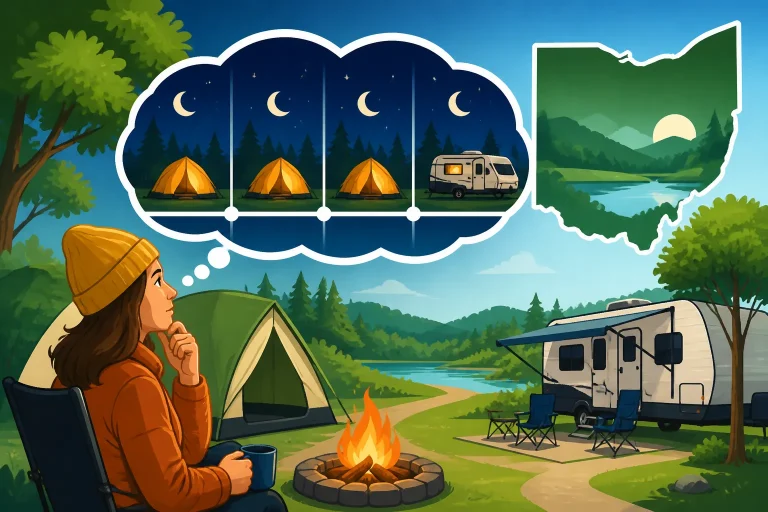
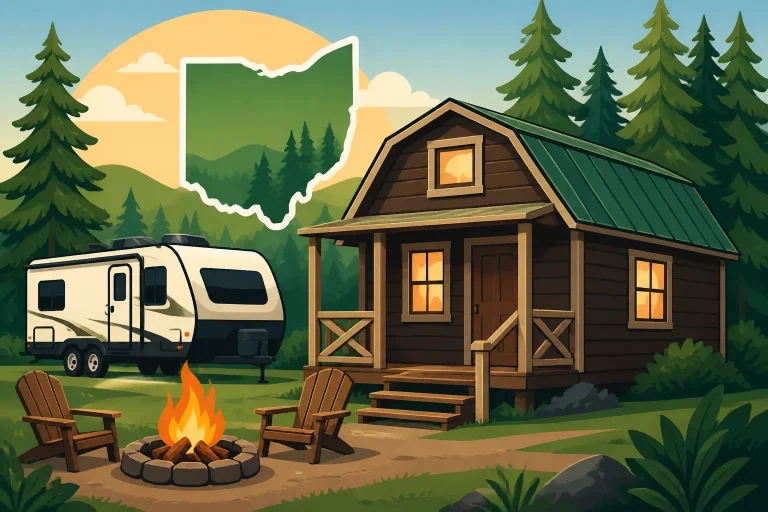
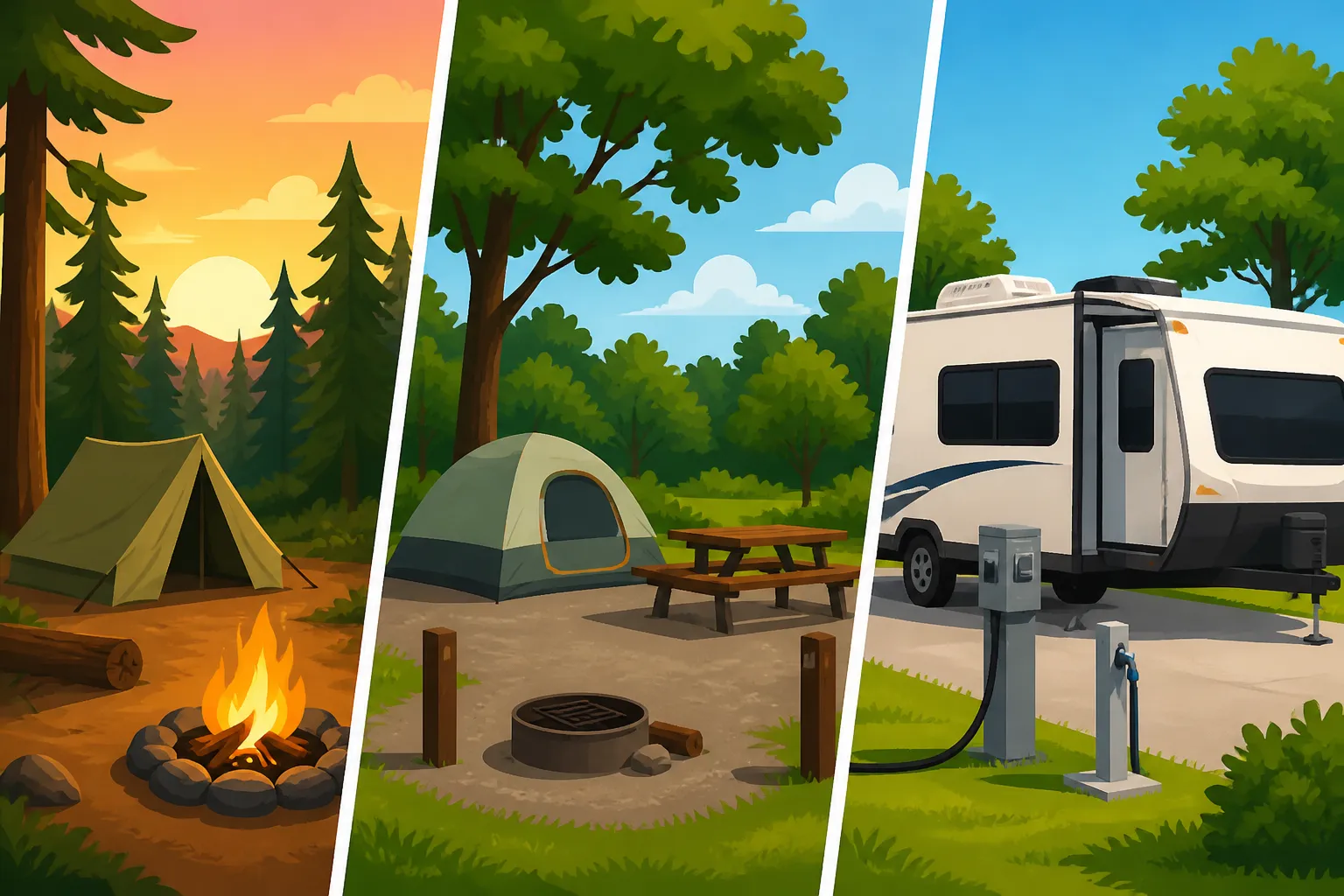
The broadest difference is how much the site itself provides. At the primitive end, campers should expect fewer or no utility connections at the site and plan to manage more of their own needs. At the other end, a full-service site offers a greater level of connection than a site without hookups. Between those ends, Ohio state park campgrounds list electric and premium electric-and-water options as well as full-service sites.
The labels are useful starting points, not a substitute for checking the details. A campsite description may tell you the hookup category, but you should still confirm the exact connections, the site’s layout and the services available nearby. A site with electricity may help with powered equipment, while a site without it calls for a different plan. A site listed as premium electric-and-water gives you a different set of conveniences from an electric-only site, but you still need to confirm the campground’s current listing and the specific site.
The Ohio Department of Natural Resources also notes that sites range from full-service to primitive; many are pet friendly. That does not mean every individual site permits pets. If you are camping with an animal, check the campground and site details, along with any applicable pet rules, before you choose.
Think of the site range as a spectrum of trade-offs:
- Less infrastructure can mean a simpler, more self-reliant stay. It may suit campers who already bring the equipment and supplies they need.
- A site with electric service can make it easier to use equipment that needs power, but it does not provide water just because it has electricity.
- Premium electric-and-water sites offer those two listed services, but do not assume that they include other connections.
- Full-service sites are at the more equipped end of the range, but check the official listing to learn what the label means at that campground.
- Seasonal conditions can affect what is available at a site, so the listing and current park information matter as much as the category name.
If you are unsure whether a no-hookup site will work for your setup, compare it with Primitive or Electric for a First Ohio State Park Tent Trip?. For a broader checklist of what to decide before choosing a destination, see Choosing an Ohio State Park for Camping: Questions to Settle First.
Compare campsite types by the needs they meet
The most useful way to compare site types is to start with what you need at the campsite, rather than choosing the most equipped option by default. A tent camper with no appliances may not gain much from utility hookups. Someone using a trailer or powered equipment may value electricity, water or other services more. The right choice depends on what you are bringing and what the campground actually provides.
| Campsite type | What the category tells you | What to confirm before choosing |
|---|---|---|
| Primitive | The site is at the less-equipped end of the range and may have few or no utility connections | Water access, restroom and shower options, site access, and what you must bring |
| Electric | Electricity is included in the site category | Whether water is available at the site, where it can be accessed, and whether the connection suits your equipment |
| Premium electric-and-water | The listing identifies electric and water service | The exact hookup arrangement, any other services, and whether the selected site fits your setup |
| Full-service | The site is at the more equipped end of the range | Which services are included at that campground, whether they are operating for your dates, and any seasonal changes |
The table describes questions to ask, not a promise that every campground has every category. The Ohio Department of Natural Resources says that Ohio state park campgrounds offer electric, premium electric-and-water, and sites with full-service hookups; the exact hookup type and site availability vary by campground, so check that park’s listing when choosing a site; in winter, some full-hookup sites have no water at the site and provide electric only, with reduced rates where stated.
That variation matters when comparing a park’s overall campground page with an individual site listing. A general page may describe the campground’s range, while the selected site’s details show what you can actually expect there. Treat the site-specific information as essential, especially if your trip depends on a particular connection.
The same caution applies to the word “full.” It signals a more equipped category, but do not assume it tells you every detail about the connection, whether utilities will be operating for your dates, or how the site is arranged. If the listing is unclear, use the official park information to confirm the details before committing to the site.
A useful comparison starts with your equipment:
- Tent without powered gear: A primitive or non-electric site may be a practical fit if you can manage without site power and have a plan for water and facilities.
- Tent with powered equipment: An electric site may help, but check what the connection supports and whether your equipment can be used safely and appropriately.
- Camper or trailer: Compare the site’s hookups with the vehicle’s needs. A label alone does not establish that the site has the specific service or layout you need.
- Trip that depends on water at the site: Confirm that the selected site has water service and that it is expected to be available during your stay.
- Cold-weather trip: Check seasonal service conditions rather than assuming that a site’s usual category guarantees the same hookups in winter.
For a closer comparison of site categories based on your shelter, Which Ohio State Park Hookup Level Fits a Tent, Van or Trailer? can help you decide what to check.
Choosing primitive, electric or full-service
The best site is not necessarily the one with the most services. It is the one that supports your trip without asking you to pay for conveniences you will not use or leaving you without something you depend on. Start with the basics: what will you sleep in, what equipment will you run, and how will you handle water and daily tasks?
When a primitive site can work
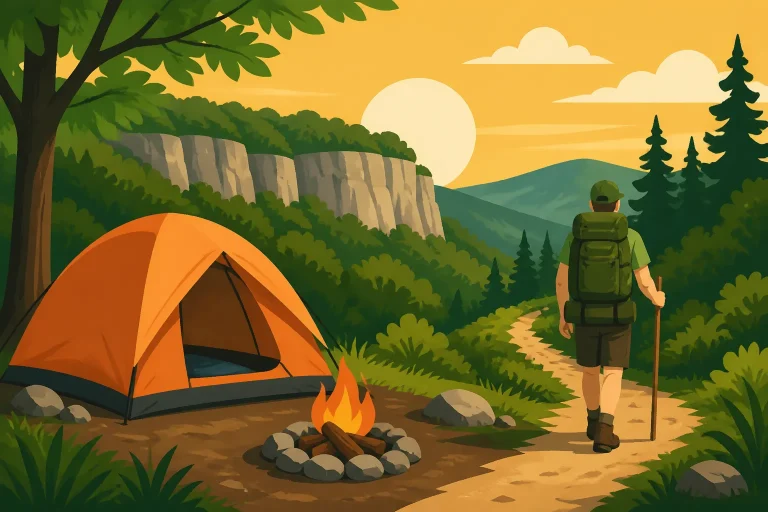
A primitive site can suit campers who are comfortable being more self-sufficient and whose setup does not require a utility connection. It may also be a sensible choice for a straightforward tent trip where the campground’s shared facilities meet your needs.
Before choosing one, identify what the site itself does not provide. The fact that a site is in a state park campground does not mean every facility is beside it or available in every season. Check the campground listing for information about water, restrooms and showers, and consider how far you are willing to walk or drive to reach them. If you need a particular kind of facility, confirm that it is available for your dates.
Primitive sites also call for more preparation. Think through drinking water, food storage, lighting, charging devices, waste and weather. That is not a reason to rule them out; it is a reason to arrive with a plan. Campers who enjoy a simpler setup may find that the lower level of infrastructure fits the point of the trip. If you want to understand the possible differences in facilities, see Primitive Sites at Ohio State Parks: Pit Toilets or a Showerhouse?.
When electricity is worth prioritizing
Electric service can be important if your camping setup depends on powered equipment. It may also make a trip more comfortable when you use devices that need charging. But electricity does not answer every planning question: it does not tell you whether the site has water, what other hookups it includes or whether the connection fits your equipment.
Make a short list of what you intend to plug in, then compare that list with the campground’s information. Avoid assuming that an extension cord, appliance or other piece of equipment will work just because the site has power. Check the details before you travel, and pack for the possibility that you will not have the setup you use at home.
An electric site can be an in-between choice for people who want some convenience without selecting a more extensively equipped option. It may also be a sensible match for a tent camper with a specific need for power. The decision depends on your actual equipment and on the amenities that matter to you, not on whether a category sounds more comfortable.
When water or broader services matter
If your trip depends on water at the site, look for a listing that identifies water service rather than inferring it from the word “electric.” Premium electric-and-water is a distinct category in Ohio state park campgrounds, but the specific arrangement still needs checking. The same applies if you expect a full-service site: verify which services the campground provides, and whether they will be available on your dates.
This is particularly important for campers using a vehicle or trailer whose systems depend on specific connections. Compare your setup with the exact site details, not only the general campground description. If you cannot tell whether a site meets your requirements, check the official listing or ask the park using current contact information from its official website.
Some campers also choose fuller hookups because they want to reduce the amount of daily setup and monitoring. That can be a worthwhile comfort trade-off, but it is not a guarantee of a specific site location, view or level of privacy. Check the map and site description as well as the utility category.
For a detailed look at how utility categories compare, read Electric and Non-Electric Campsite Rates at Ohio State Parks. Rates and charges can change, so check the provider for current figures rather than relying on old estimates.
Reading a campground listing before you choose
The campground listing is where a broad campsite category becomes a usable decision. Read it with your own needs in mind, and check the individual site details when they are available. If you compare only the park name or a short label, you can miss conditions that affect whether the site works for you.
Use this checklist while reviewing a listing:
- Hookup type: Identify whether the site is primitive, electric, premium electric-and-water or full-service. Do not assume that one category includes another connection.
- Seasonal service: Check whether water or other hookups may change during the period you plan to camp.
- Site-specific notes: Read the description for the selected site, not just the campground overview.
- Map position: Look at the campground map to understand the site’s location relative to facilities, roads and the surrounding layout. Reading an Ohio State Park Campground Map Before You Book can help with this step.
- Access and space: Consider whether the listed site appears suited to your shelter and equipment. If the listing does not answer that, confirm before booking.
- Shared facilities: Establish what facilities are available in the campground and whether they are open for your dates.
- Pets: Confirm the pet policy for the site and any places you expect to visit during your stay.
- Current conditions: Check the official park information again before departure if your plans depend on a particular service.
A campground listing can be clear about the general class of site while leaving practical questions unanswered. For example, you may know that a site is electric without knowing whether water is provided at that site. You may see a full-service label but still need to confirm whether all expected connections are operating in the season you plan to visit. Asking targeted questions is more useful than asking only whether a campsite has “hookups.”
A good question includes the specific need: whether the site has water at the site, whether the service is expected to be operating during your dates, or whether the site layout can accommodate your setup. Use the official park information to find current contact details if the listing is not enough.
Availability also varies by campground. A site type shown at one park is not evidence that another park offers the same option. If your choice of campground is flexible, compare the listings across parks and prioritize the feature that matters most. For example, you might begin with electric access, water at the site, or a primitive setting, then narrow your options based on location and facilities.
When choosing a numbered site, do not use the category as a substitute for reading the site’s description. The category explains a general level of service; the listing and map help you evaluate the actual spot. For more detail on finding hookup information, see Finding Hookup Details on an Ohio State Park Campground Page.
Planning around winter and changing services
A campsite’s service level can be affected by the season. This is an easy detail to overlook if you have camped at the same campground during warmer weather and assume the arrangement stays unchanged. In winter, some full-hookup sites have no water at the site and provide electric only, with reduced rates where stated, according to the Ohio Department of Natural Resources.
The practical point is to check the current listing for the dates you plan to visit. A full-service category does not remove the need to confirm seasonal conditions. If access to water at the site is important, verify that detail directly rather than relying on the category name. If a site offers electricity but not water during the period you are visiting, decide whether you can manage with another water plan before you choose it.
Winter planning also means thinking about the campground’s broader facilities, not just the site connection. Check what restrooms, shower facilities and water access are available for your stay. Do not assume that a facility that is open during a busier season will operate in the same way during colder weather. The campground’s official information is the place to confirm current seasonal services.
A useful winter plan includes:
- A clear answer about whether water is available at the selected site.
- A backup plan for carrying or obtaining water if the site does not provide it.
- Confirmation of which shared facilities are operating during the stay.
- A realistic assessment of the equipment and power needs for colder conditions.
- A check of current campground information before leaving, especially if a specific utility is essential.
If your plan relies on water service, do not book based only on the phrase “full-service.” Check whether the site has water for your dates and what alternatives are available if it does not. For more on seasonal campground water, see Winter Water at Ohio State Park Campgrounds: Spigots and Shower Houses.
The same principle applies to any trip where service conditions matter. A site may be a strong fit in one season and a poor fit in another. Let the current information, not a past visit or a broad label, guide the decision.
Matching a site to your camping setup
A practical site choice begins with the equipment you will actually use. Consider your shelter, your vehicle or trailer, any powered devices and the supplies you are prepared to carry. Then match those needs against the services confirmed for the particular site.
Tent campers
A tent camper may have the most flexibility, particularly if the trip does not depend on electricity. The key questions are how you will access water and shared facilities, and whether your gear is suited to the site’s location and surface. If you do need power, compare the electric-site option with what your equipment requires rather than assuming that any electric connection will work for everything.
A tent trip can also make it easier to focus on the campground experience rather than utility convenience. But “primitive” should not be treated as shorthand for a particular restroom arrangement or distance to water. Those details are campground-specific. Check them before choosing, especially if you are camping with children or anyone who needs easier access to facilities.
Van, trailer and RV campers
For a van, trailer or RV, the utility category can be central to the decision. Confirm the site’s exact connections and compare them with the vehicle’s requirements. Also review the available site details and map to assess whether the location works for your rig and how you plan to set up.
Do not assume a campsite will fit simply because its hookup type is suitable. The site’s dimensions, access and layout are separate considerations. If the listing does not make those clear, use official park information to get an answer before traveling. This is especially important if changing sites at arrival would be difficult.
If you travel with equipment that needs electricity, consider the practical consequences of an interruption or a seasonal change in service. Bring a backup plan appropriate to your trip, and check that your equipment can be used with the connection offered at the site.
Campers with a specific comfort or access need
Sometimes the deciding factor is not the camper type but a particular need: reliable access to electricity, water at the site, nearby facilities or a pet-friendly option. Name that need before comparing campgrounds. It helps you filter out sites that cannot meet it and directs your questions toward the detail that matters.
If a member of your group needs a particular facility or a manageable route to it, check the campground map and site details rather than relying on the hookup category. If you are traveling with a pet, confirm the policy for the specific site and the areas you plan to use. The statement that many sites are pet friendly is not a guarantee for every site or every area.
For groups with different comfort preferences, discuss the trade-offs before booking. Someone who prefers fewer facilities may be content with a primitive site, while another camper may value electricity or water access. Agree on which requirements are essential and which are conveniences. That makes it easier to choose a site that works for the group rather than revisiting the decision after arrival.
Common assumptions to avoid
Campsite labels can make comparisons quick, but several common assumptions can lead to a mismatch between a site and your plans.
- Assuming every park offers the same categories: Site types and availability vary by campground. Compare the specific listings.
- Treating electric as equivalent to electric-and-water: Check the category and the site details. Power alone does not establish that water is available at the site.
- Assuming full-service means every utility will be operating: Seasonal conditions can change what a site provides. Confirm the service conditions for your dates.
- Relying only on a campground-wide description: Read the individual site details and consult the map.
- Assuming a category guarantees a comfortable location: Hookup level and site setting are different questions.
- Treating pet friendly as universal permission: Confirm the rules for the particular site and the areas you intend to use.
- Choosing the most equipped option automatically: More services may be useful, but they are not necessary for every camping setup. Consider what you will actually use.
- Assuming last season’s experience still applies: Recheck current official information when your trip depends on a particular service.
These checks do not need to make campsite selection complicated. They help separate what the category tells you from what you still need to learn. If your needs are simple, a quick review may be enough. If your trip depends on water, power, equipment fit or seasonal facility access, take the time to verify those details.
Frequently Asked Questions
Are all Ohio state park campsites full-service?
No. Ohio state park campgrounds offer a range of site types, and the available options differ by campground. Check the official listing for the park and site you are considering.
Does an electric site include water?
Not necessarily. Electric and premium electric-and-water are distinct campsite categories. Verify the connections listed for the selected site.
Can a full-service site have limited hookups in winter?
Yes. Some full-hookup sites may have no water at the site and provide electric only during winter. Check the current information for your dates.
Are all Ohio state park campsites pet friendly?
No. Many are pet friendly, but that does not establish that every site or area permits pets. Confirm the policy for the specific campground and site.
Sources
- Ohio Department of Natural Resources — Ohio State Parks Brochure (PDF) (checked November 23, 2026)
- Ohio Department of Natural Resources (checked November 23, 2026)
Disclaimer
This article is for general informational purposes only and does not constitute professional advice. Laws, prices and regulations vary by location and change over time. Consult a qualified professional for guidance on your specific situation. Ohio Camping & RV is not a government agency and is not affiliated with any government agency.